
October 12, 2026
Losing a single tooth affects more than the appearance of your smile. It can change the way you chew, the way you speak, and even how your remaining teeth line up over time. When patients come to us with a gap to fill, two of the most common solutions we discuss are a single tooth implant and a traditional dental bridge. Both can restore a natural look and a comfortable bite, but one question comes up again and again: which option lasts longer?
In this article, we compare the lifespan of each restoration, explain why the difference exists, and share the habits that help either treatment go the distance. Our goal is to give you the information you need to make a confident, well-informed decision about your smile.
How a Single Tooth Implant Works
A single tooth implant replaces the entire tooth, from the root to the visible crown. The process begins with a small, biocompatible titanium post placed in the jawbone where the missing tooth once was. Over the next few months, the bone fuses with the post through a process called osseointegration, creating a stable foundation that functions much like a natural tooth root. Once healing is complete, we attach an abutment and a custom crown designed to match the shape and shade of your surrounding teeth.
Because the implant is anchored directly in the bone, it stands on its own. It does not rely on neighboring teeth for support, and that independence plays a major role in how long it lasts. If your jawbone needs additional volume before placement, we can perform bone grafting to build a strong base for the implant.
How a Traditional Dental Bridge Works
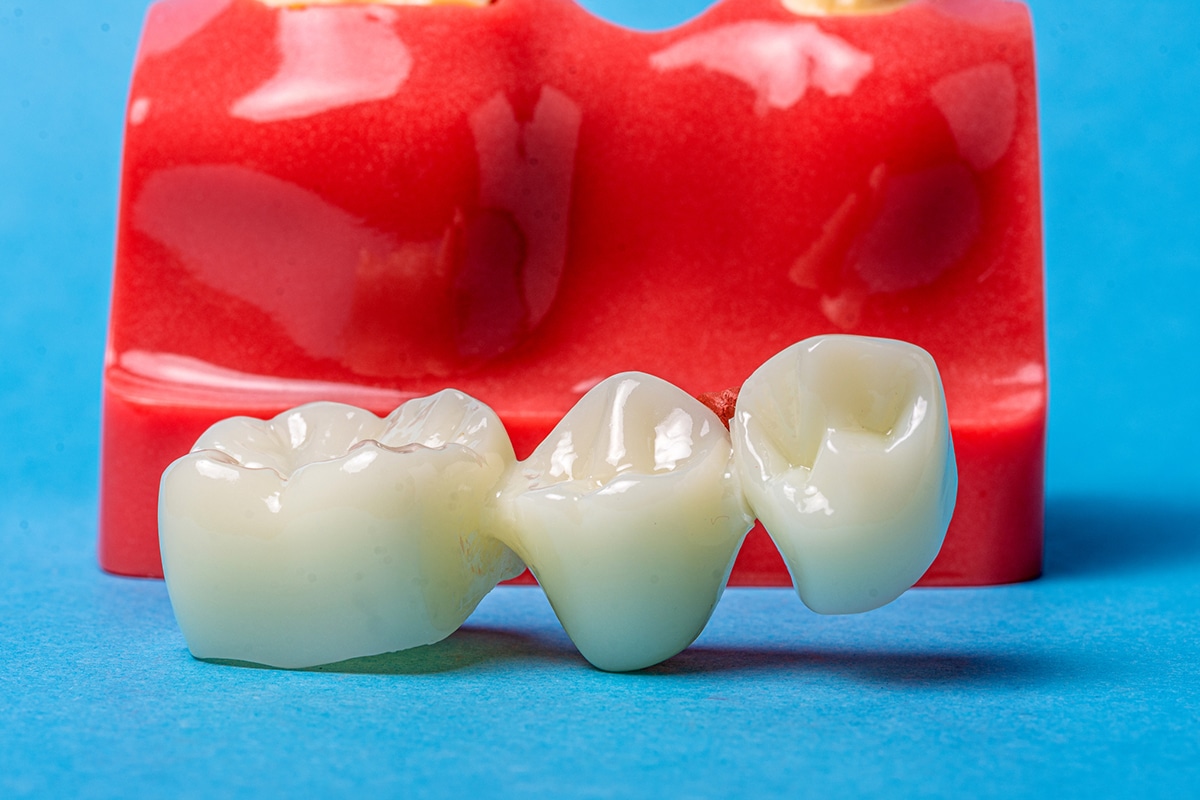
A traditional dental bridge spans the gap left by a missing tooth by using the teeth on either side as anchors. To prepare for a bridge, we reshape the two adjacent teeth so they can hold crowns. These crowned teeth, called abutments, are connected to a replacement tooth, called a pontic, that rests over the gap. The entire unit is then cemented in place as a single piece.
Bridges have been a trusted restorative option for decades. They can typically be completed in a shorter timeframe than implants, and they do not require surgery. However, because a bridge depends on the supporting teeth, its long-term success is closely tied to the health of those anchor teeth.
Comparing Lifespan: Which Option Lasts Longer?
When it comes to longevity, single tooth implants generally have the advantage. With proper care, the implant post itself can last for decades and, in many cases, a lifetime. The crown attached to the implant handles daily chewing forces and may eventually need to be replaced after 10 to 15 years or more, but that process is straightforward because the foundation stays securely in place.
A traditional dental bridge typically lasts between 5 and 15 years, with many lasting around a decade before they need attention. Some well-maintained bridges last longer, but most patients who choose a bridge should expect to replace it at least once over the course of their lifetime. Long-term studies of dental implants consistently report success rates above 90 percent after 10 years, which is why implants are often considered the most durable tooth replacement available today.
Why Dental Implants Tend to Outlast Bridges
The difference in lifespan comes down to how each restoration interacts with the rest of your mouth.
Implants Help Preserve the Jawbone
When a tooth is lost, the bone that once surrounded its root no longer receives stimulation from chewing. Over time, that bone begins to shrink. An implant post acts like a natural root and helps keep the jawbone stimulated and healthy. A bridge, on the other hand, sits on top of the gums. The bone beneath the pontic can gradually recede, which may create a small space under the bridge and affect both its fit and its appearance.
Implants Protect Neighboring Teeth
Placing a bridge requires removing enamel from two teeth that may otherwise be perfectly healthy. Those anchor teeth then carry the extra load of supporting the replacement tooth. If decay develops along the edges of the crowns or one of the anchor teeth becomes damaged, the entire bridge may need to be removed and replaced. In some cases, an abutment tooth may even require root canal therapy. Because an implant stands independently, your natural teeth remain untouched.
Implants Are Not Vulnerable to Cavities
The materials used in an implant and its crown cannot develop tooth decay. That said, the gum tissue around an implant still needs care. Without good hygiene, inflammation called peri-implantitis can develop and threaten the stability of the implant, which is why routine cleanings remain essential.
When a Dental Bridge May Still Be the Right Choice
Even though implants usually last longer, a bridge can be an excellent solution in certain situations. If the teeth next to the gap already have large fillings or need crowns, a bridge can restore those teeth and replace the missing tooth at the same time. Patients who are not good candidates for surgery because of certain health conditions, or who prefer to avoid a longer treatment timeline, may also find a bridge to be the better fit.
Cost is another consideration. A bridge often has a lower upfront cost than an implant. However, when you factor in potential replacements over the years, an implant can be the more cost-effective investment over the long run. We always take the time to walk through these considerations with each patient so there are no surprises.
Factors That Affect the Lifespan of Either Option
No matter which restoration you choose, your daily habits have a significant impact on how long it lasts. Brushing twice a day and flossing daily keeps plaque from building up around the implant or under the bridge. For bridges, floss threaders or a water flosser make it easier to clean beneath the pontic, where food particles tend to collect.
Healthy gums are just as important. Gum disease can weaken the bone that supports an implant and the teeth that anchor a bridge. Regular checkups and professional cleanings allow us to catch early signs of trouble, and we offer laser gum therapy to treat periodontal disease when needed. If you grind or clench your teeth at night, a custom night guard can protect your restoration from excessive force. Avoiding tobacco and limiting very hard or sticky foods will also help extend the life of your new tooth.
Finding the Longest Lasting Solution for Your Smile
If longevity is your top priority, a single tooth implant is usually the stronger long-term choice. It preserves your jawbone, protects your neighboring teeth, and can serve you well for decades. A dental bridge remains a reliable and attractive option, especially when the surrounding teeth already need restorative work or surgery is not ideal.
The best way to know which treatment fits your needs is a personalized evaluation. At our practice, we use advanced 3D imaging and low-radiation digital x-rays to assess your bone, gums, and surrounding teeth before recommending a plan. We believe in educating our patients about every option, so you can move forward feeling informed and comfortable with your decision.
Frequently Asked Questions About Single Tooth Implant vs. Dental Bridge
Is a dental implant worth the higher upfront cost compared to a bridge?
For many patients, yes. While an implant usually costs more at the start, it is designed to last much longer than a bridge and does not require altering healthy neighboring teeth. Over time, avoiding one or more bridge replacements can make an implant the more economical choice.
Can I still get an implant if my tooth has been missing for a long time?
Often, yes. When a tooth has been missing for an extended period, some bone loss may have occurred. In those cases, we can perform bone grafting to rebuild the area and create a solid foundation for the implant.
Does getting a dental implant hurt?
Implant placement is performed with local anesthesia, so most patients feel pressure rather than pain during the procedure. Mild soreness afterward is common and is usually manageable with over-the-counter pain relievers. We focus on keeping every step as comfortable as possible.
How do I clean under a dental bridge?
In addition to brushing twice daily, we recommend using a floss threader, a special bridge floss, or a water flosser to clean beneath the pontic. Removing trapped food and plaque from this area helps protect the anchor teeth and keeps your gums healthy.
Can I switch from a dental bridge to an implant later?
In many cases, it is possible to replace a failing or aging bridge with an implant. We will evaluate the health of your jawbone and gums to determine whether you are a good candidate and whether bone grafting would be helpful first.
Aliso Smiles is a family, cosmetic, and restorative dental practice in Aliso Viejo, CA, where Dr. Sajit Patel and our team provide comfortable, technology-driven care for patients ages 1 to 100. To find out whether a single tooth implant or dental bridge is right for your smile, contact us today to schedule a consultation.